The long, lean and athletic silhouette of the 1890's persisted. Men's hair was generally worn short while their beards were less pointed than before and mustaches were often curled. Three- piece suits consisting of a sack coat with matching waistcoat and trousers were worn. Men always matched their coat and waistcoat with contrasting trousers or had a matching coat and trousers with a contrasting waistcoat.
Men's trousers were shorter than what they had worn several years back. They often had cuffs and were creased on the front and back using the new trouser press. This press was designed to smooth wrinkles and to form a crease in men's wear. The presses were mainly used by hotels and businessmen. Once this press was publically used, it had change society's way of wearing clothing. Men wanted to look clean-cut, precise and stylish. Since men's fashion was closely identical to each other than women's styles, this press impacted a dramatic change. It spread rapidly through the high-class businessmen and eventually into the homes of the middle-class.
Website link:
http://www.costumes.org/history/100pages/mensfashhist.html
Men's Fashion of the Early 1900's

Fashionable Women of the Early 1900's
In the beginning of the 1900's, women's fashion continued the long, elegant lines of the late 1800's. The hourglass shape became popular again and the necklines of women's tops were supported by very high boned collars. Women's skirts were long enough to brush the floor. They often had a train on evening and day dresses. A new, columnar silhouette introduced by the designers in Paris late in the decade signaled the approaching abandonment of the corset as an indespensible gramet of fashionable women.
In a more social perspective, desginers sent fashion models to the Longchamp races wearing the  latest styles. The women would show off the newest designs, hoping to develop some business out in the public. The new styles featured form-fitting gowns with high or undefined waists. Ankle-length skirts and long tunic-like jackets were worn which required a different "straight line" corset.
Huge, broadbrimmed hate were worn in mid-decade to accessorize their attire.They were trimmed with mases of feathers and occasionally complete stuffed birds or decorated with ribbons and artificial flowers. Masses of wavy hair were fashionable.
1800's Fashion
Starting back from the mid 1800's, fashion began evolving in four different ways that would potentially change the future of fashion trends. The sewing machine was first invented, followed  by the designs of women's dress that were starting to be made with specific design patterns. There were also dyes that were made which then allowed the colors of the fabric to be more dramatic and intense. Lastly, there was a crinoline domed skirt silhouette that was designed with a flattened front and showed a larger back which gave it a very unique look. A woman in the 1800's only wore dresses and long evening gowns everyday!
 Some of the mid 1800's styles that were worn then, have been carried through many different changes in fashion trends over the years, yet still having the same basic look! For example, there were skirts and tops that were called aprons and they draped over the women making them look like a beautiful piece of
  upholstery. Rounder waistlines were in style and they gradually became higher. Some of the dresses had slim fitting sleeves with a larger, dramatized bottom to the dress. There were also evening dressing worn that were form fitting and lightly draped with fabric and elongated with a train.
Website link:
http://www.fashion-era.com/mid-late_victorian_fashion.htm
Technology Change of the Hockey Stick


Egyptian Law

http://www.touregypt.net/featurestories/law.htm
Changes in Temperature
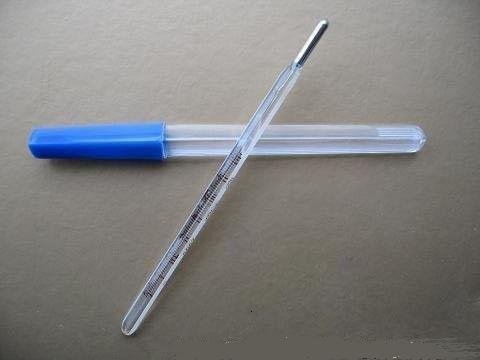
An article of glass thermometers about being a safety hazard is posted below...
http://www.smartbrief.com/news/aaaa/industryPR-detail.jsp?id=F19BE2E1-ADC9-46A7-83F9-DA35F6AF9FA7